
Written by Dimitrios Vrachatis, Interventional Cardiologist – Electrophysiologist, Assistant Professor, School of Medicine, National and Kapodistrian University of Athens.
We have all felt “something” and immediately wondered whether it is related to the heart. The same symptom can have different causes. Telling them apart is not always easy, especially when symptoms are mild or have been ignored for so long that they feel normal. A symptom becomes more significant with age: the risks are not the same at 20 and at 50. Known heart disease, high-risk conditions or a strong family history combined with personal risk factors, such as smoking, also matter.
Below, you can find what to look out for when a symptom appears.
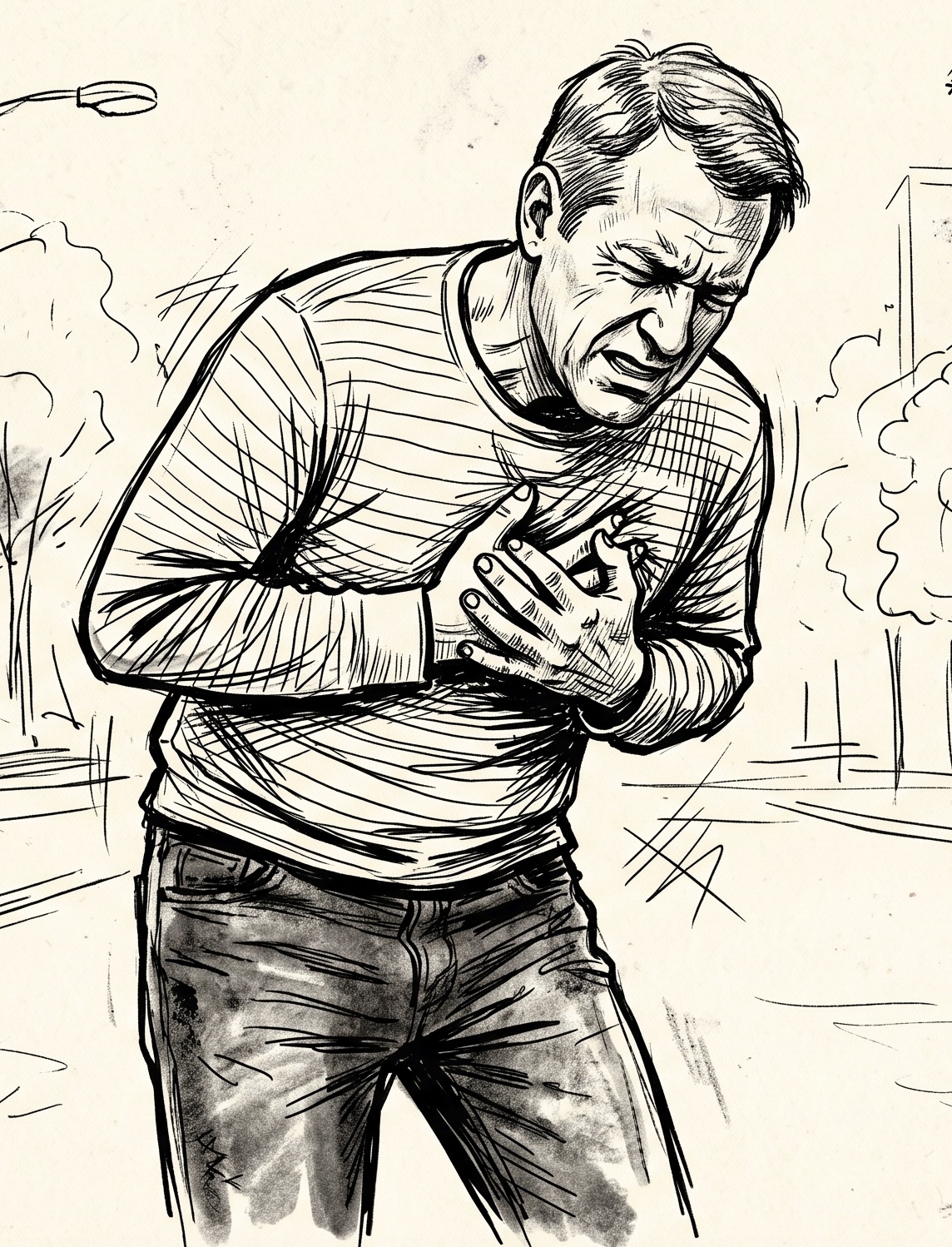
When to Seek Help Immediately
Some symptoms leave no room for delay. They need immediate medical assessment, sometimes by doctors from different specialties. If a symptom is new, severe, lasts longer than 1–2 minutes, spreads to different parts of the body or causes a cold sweat and a feeling that you may faint, call 166 immediately.
To assess whether this applies, try to answer calmly:
- Can I continue what I was doing before it started?
- Can I speak or walk while experiencing the symptom?
- How intense is it on a scale from 1 to 10?
- How long does it last?
- How do I look when it happens? Do I look unwell? Ask someone nearby.
- Does it occur while sleeping, sitting or exerting myself, such as walking, going uphill or running?
- Where in my body is it located? Does it spread elsewhere?
The Most Common Symptoms
The symptom is paramount: it is the body’s warning that something important may be happening. There is no need for unnecessary anxiety, but we should not ignore something particularly intense or recurring. We tend to minimise our own symptoms and assume they will pass. A better approach is to do what we would advise someone we love who had exactly the same symptom.
Chest pain
It can happen to anyone. The cause may range from a simple muscle injury to a heart attack. We do not ignore it.
Palpitations
A very common symptom, particularly when lying down. When should it cause concern?
Shortness of breath
When it is the first symptom, it is usually important. If something else happens first and breathlessness accompanies intense anxiety, the situation is different.
Fainting
Losing consciousness at the sight of blood or after severe stress, such as hearing bad news, may be benign. Nevertheless, it is always advisable to discuss it with a cardiologist.
What Happens at the First Visit
When a particular symptom is troubling you, the cardiologist will first ask about its characteristics. This detailed questioning is not idle curiosity: the more precisely you describe what you felt, the better you can guide the doctor towards its cause. You will also be asked about risk factors, including family history, medical conditions and lifestyle habits, and whether you take medication.
Together, this information points towards possible causes and helps identify whether you have a higher or lower risk of certain diagnoses. The cardiologist will then examine you and perform an electrocardiogram and/or an echocardiogram.
In most cases, these tests and the information provided give a fairly complete picture, which the doctor will explain. Sometimes blood tests, urgent or otherwise, or further diagnostic examinations are needed to complete the assessment.
Tests Your Cardiologist May Use
Modern technology allows us to examine the heart in several ways. These are some of the main tests that may be requested.
Electrocardiogram
A snapshot of the heart’s electrical activity at the time of the examination.
Echocardiogram
A short video of the heart itself, providing information about its pumping strength, valve function and the condition of the pericardium.
Blood Tests
Highly accurate biomarkers can show whether the heart is under strain while working (BNP / NT-proBNP), or whether even a small part of its muscle is dying (high-sensitivity troponin).
Chest X-ray
A black-and-white image providing a broad view of the heart’s size and the condition of the lungs. It is used less frequently today.
Coronary Angiography
Shows the lumen of the coronary arteries: the vessels supplying oxygenated blood to the heart. It can be performed using the traditional invasive method (conventional coronary angiography) or non-invasively using CT coronary angiography.
Cardiac MRI
Provides detailed images of the heart tissue, valves and pericardium. It is used in specific circumstances rather than as a routine examination.
Holter Monitor – Loop Recorder
In simple terms, an extended electrocardiogram. It can record the heart’s electrical activity for one to several days (Holter monitor), while some devices can monitor for 3–4 years (loop recorder).
Frequently Asked Questions
What does chest pain in women mean?
Much is said about a symptom that is essentially the same in women and men. What may differ is the significance attributed to it, particularly in women around the menopause. Women often experience various symptoms that are eventually attributed to other causes. When a symptom requiring attention finally occurs, it may then be ignored, rather like the story of the boy who cried wolf.
Why do I feel palpitations when lying down?
An extra heartbeat may be noticed more often or more strongly when we relax after a busy day. This is particularly common when lying in bed, where the heart’s movements, including normal ones, can become more noticeable.
How can anxiety-related breathlessness be distinguished from a heart problem?
A full examination is usually needed to distinguish the two. When a clearly identifiable feeling of anxiety or stress comes first, the breathlessness that follows is more likely to be part of that emotional reaction. If breathlessness wakes you from sleep, worsens when lying down or walking, or starts before the anxiety, a physical cause, cardiac or otherwise, becomes more likely.
Is fainting caused by anxiety or by the heart?
If you have just won the lottery, heard bad news or seen blood after an injury and then lost consciousness, strong emotion is a likely cause. Without such a trigger, the cause needs thorough investigation. Your cardiologist may request several tests: there is a reason for the assessment protocol.