
Written by Dimitrios Vrachatis, Specialist Cardiologist, PhD, National and Kapodistrian University of Athens.
What is coronary artery disease?
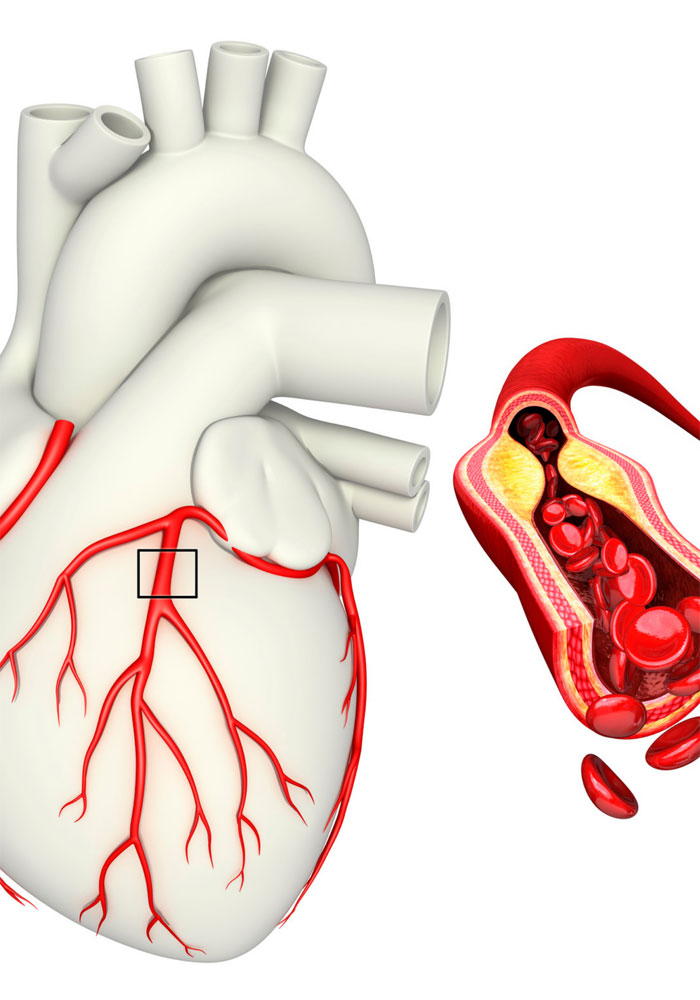
The heart pumps blood to and from the systemic circulation. The heart muscle itself receives blood through the coronary arteries:
- The left coronary artery supplies most of the myocardium. Its initial segment, the left main (LM), divides into the left anterior descending (LAD) and circumflex (LCx) arteries. In approximately 15–30% of people, a third branch, the ramus intermedius (RI), is present.
- The right coronary artery (RCA).
Coronary artery disease occurs when atherosclerotic plaque accumulates within arterial walls and narrows their lumen.
What is ischaemia?
Ischaemia occurs when coronary blood flow cannot meet the myocardium’s oxygen needs. It may result from reduced supply, increased demand or both.
In coronary disease, growing atherosclerotic plaque narrows the artery and can cause ischaemia during exercise or even at rest. Ischaemia usually causes chest pain or angina.
What causes it?
Coronary disease is multifactorial, influenced by many genes and lifestyle conditions. Contributing factors include:
- Hypertension
- Diabetes
- Dyslipidaemia
- Smoking
- Obesity
- Family history: coronary disease in the father before 55 or mother before 65
- Inactivity
- Psychological stress
Can coronary disease be prevented?
Reducing its likelihood requires early management of all these risk factors. Healthy habits and regular preventive checks allow timely, effective intervention when necessary.
Why is stopping smoking so important?
Many risk factors are conditions that arise despite our wishes, family history we cannot change or circumstances connected with basic human needs. We can modify them, but not eliminate them completely.
Stopping smoking permanently removes an additional risk and gives both you and your family a gift of life.
This applies before and after coronary disease develops. It is never too late.
What are the symptoms?
Disease usually develops gradually, allowing the myocardium to adapt to reduced oxygen supply. Chest pain or angina may occur only when oxygen demand rises, for example during exercise, in the presence of a substantial narrowing. Formerly called stable angina, this is now classified within chronic coronary syndromes.
A plaque can also cause an acute coronary syndrome, unstable angina or myocardial infarction. Symptoms can start suddenly and vary in intensity:
- Marked weakness or feeling unwell
- Palpitations from fast or slow arrhythmias
- Fainting
- Breathlessness
- Severe chest pain, often tightness, burning or pressure behind the breastbone spreading to the neck and left arm, although presentations vary
- Unfortunately, sudden cardiac death can be the first manifestation or occur soon after symptoms begin
How is coronary disease diagnosed?
Conventional coronary angiography establishes the diagnosis definitively. Because it carries small risks, it is generally the final investigative step.
Initial assessment estimates both the likelihood of disease and its clinical significance, including how much myocardium may be at risk.
Your cardiologist considers risk factors, including blood pressure, glucose, cholesterol, weight, smoking and family history; the overall history, including age, menopause, peripheral arterial disease and autoimmune or rheumatic conditions; and symptoms, such as reduced exercise capacity, exertional pain or breathlessness, or waking at night with these symptoms.
Depending on the estimated likelihood, a functional test may be performed: an exercise test, stress echocardiogram, perfusion scan or stress MRI. If more than 10% of the myocardium is at risk, angiography should follow. Severe symptoms or additional findings, such as reduced function on echocardiography, may lead directly to angiography.
For low-to-intermediate likelihood, CT coronary angiography is particularly useful because of its high value in excluding disease.
How is it treated?
Treatment is comprehensive and includes:
- Intensive risk-factor management, including blood pressure, glucose and cholesterol, through medication, diet, exercise and smoking cessation
- Antiplatelet medicines, most commonly aspirin
- Revascularisation through angioplasty and stenting or, in more severe cases, bypass surgery
In stable angina, revascularisation aims to relieve symptoms. When lesions threaten a large myocardial area, it also aims to improve life expectancy.
In acute coronary syndromes, blood flow must be restored urgently to save myocardium and prevent death or heart failure.
During an acute infarction, platelets and other components accumulate on a ruptured or eroded plaque, forming a clot that partly or completely blocks blood flow.
Revascularisation must occur as quickly as possible. Timely treatment, particularly within the first 2–3 hours, may leave little lasting functional damage. Delay can cause substantial impairment and eventual heart failure.
Why can a stable narrowing suddenly cause a heart attack?
The precise circumstances and plaques most likely to cause acute events, the vulnerable plaque hypothesis, have been studied extensively. Plaques with a thin fibrous cap, large lipid core, intense inflammation and new vessel growth are considered more prone to adverse events.
Diet and Coronary Disease
A lipid-lowering, reduced-calorie diet based on the Mediterranean pattern is recommended to improve cholesterol and reduce weight. Suggestions include:
- Smaller portions
- More boiled or grilled food; fewer sweets, sauces and fried foods
- Avoid soft drinks
- At least 200 g of fruit daily
- At least 200 g of vegetables daily
- 35–45 g of fibre daily and polyunsaturated fats
- 30 g of unsalted nuts daily
- One or two fish portions weekly, including one of oily fish
- Less carbohydrate
- Less red meat, choosing lean meat
- Less dairy, choosing lower-fat products
- Less oil and saturated fat
- Alcohol is not recommended. If consumed, it should not exceed 15 g daily or 100 g weekly. A typical drink, such as 330 ml of beer or 150 ml of wine, contains approximately 14 g of alcohol.
Can I stop antiplatelet medication?
Aspirin, ticagrelor, prasugrel and clopidogrel are central to coronary disease treatment, particularly after a stent.
Take them as instructed. Any change requires advice from a specialist fully informed about your history.