
Written by Dimitrios Vrachatis, Interventional Cardiologist – Electrophysiologist, Assistant Professor, School of Medicine, National and Kapodistrian University of Athens.
What is an arrhythmia?
An arrhythmia is any departure from the normal way the heart beats. The normal, coordinated contraction of the chambers to move blood forwards is called sinus rhythm, generated by the heart’s natural electrical pacemaker. Other rhythms are called arrhythmias. Depending on their type, they may be harmless or dangerous, insignificant or clinically important.
Did you know? In sinus rhythm, the atria contract first and then the ventricles, normally 60–100 times per minute.
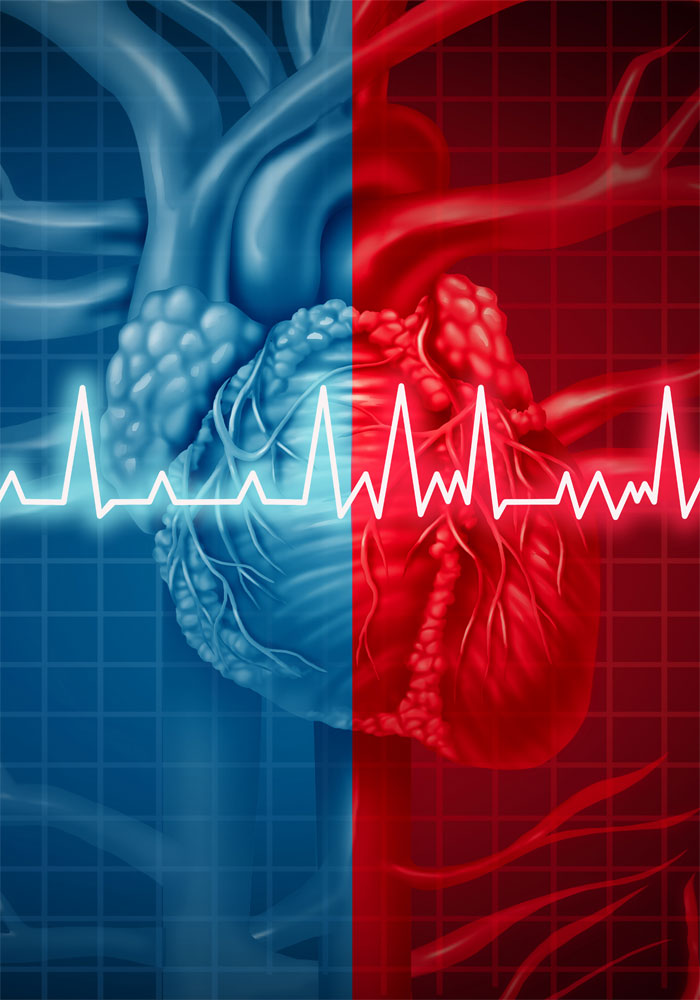
Types of Heart Arrhythmia
Arrhythmias are classified mainly by where they originate, in the atria or ventricles, and by heart rate, the number of beats per minute.
Extra Heartbeats
When an arrhythmia does not take over the rhythm completely but produces additional beats, these are called ectopic or premature beats.
A Fast or Slow Heartbeat
A rate above 100 beats per minute is called tachycardia or a fast arrhythmia. A rate below 60 is called bradycardia or a slow arrhythmia.
Supraventricular or Ventricular?
An arrhythmia arising in the atria is called supraventricular, while one arising in the ventricles is ventricular. Ventricular arrhythmias are more likely to be immediately life-threatening. Most supraventricular arrhythmias are less dangerous and allow time for treatment. The best-known example, particularly common in older people, is atrial fibrillation.
How serious are extra beats?
Two aspects matter: how frequently extra beats occur over 24 hours, called their burden, and whether they are isolated between normal beats or form more complex, organised arrhythmias.
Tip: When discussing heart rate without further qualification, we mean ventricular contractions per minute. This is usually the third number on an electronic blood pressure monitor, or the pulse number on an oximeter alongside oxygen saturation.
What Causes or Triggers Arrhythmias?
Causes vary by type. A useful distinction is between problems arising in the heart and those originating elsewhere.
Cardiac causes include coronary disease and myocardial infarction, myocarditis, some valve diseases and ageing of the electrical system.
Other bodily causes include pregnancy, thyroid dysfunction, hormonal changes, especially around menopause, kidney failure, anaemia, infection with fever, and physical or emotional stress.
External triggers include:
- Excess coffee or other stimulants, such as tea, mate or cocoa
- Energy drinks
- Alcohol
- Smoking
- Illicit drugs, such as cocaine
- Side effects of medication
What Are the Symptoms?
Symptoms vary greatly:
- No sensation at all
- Vague discomfort
- Fatigue
- Difficulty breathing
- Fluttering in the chest
- A feeling that the heart briefly stops
- Continuous pounding
- Dizziness
- Darkening vision and near-fainting
- Loss of consciousness or fainting
The seriousness of an arrhythmia does not always match symptom severity: a significant arrhythmia may produce no warning.
The reverse must not be assumed. A severe symptom should always be taken seriously and assessed medically.
Arrhythmia and Anxiety
Anxiety, stress and arrhythmias can form a cycle. Stress may produce a feeling of an irregular heartbeat. This can represent a real arrhythmia or simply awareness of normal beating.
A true rhythm change may be sinus tachycardia, isolated extra beats or an episode of a more significant arrhythmia, such as atrial fibrillation.
Conversely, sudden palpitations may trigger fear and anxiety, amplifying the sensation whether or not an arrhythmia is present. An ECG at that moment might be entirely normal.
Understanding this interaction can help you assess what is happening. If you have already been examined and no underlying disease was found, a fleeting symptom may not need another investigation. Follow any specific instructions your cardiologist has given about recurrence. A persistent or intense symptom that has not been discussed should not be ignored.
Palpitations When Lying Down or at Night
This is common. Most people notice these sensations when lying down, especially at night. Often they represent isolated extra beats and have no particular significance. With fewer distractions and a quiet environment, normal cardiac movements become more noticeable. Lying on the front or left side also brings the chest wall closer to the heart.
When Is an Arrhythmia Dangerous? When Should I See a Doctor?
There is no single answer, but seek prompt medical advice when:
- The rate is very low, below 50 beats per minute
- The rate is very high, above 120–150 without exercise
- You feel about to faint
- Breathlessness or discomfort persists
- You cannot lie down comfortably
- The rhythm is completely irregular
- You cannot perform usual activities
- Symptoms are generally severe
- You are in a high-risk group, for example after a heart attack or stroke
If none applies, you otherwise feel well, have no other health problems and experience a new but fleeting sensation, you can observe it calmly and discuss it at a routine appointment.
Tip: Recording the rhythm during or shortly after symptoms, even using a smartwatch borrowed from someone nearby, can be extremely useful and may avoid further tests.
How Are Arrhythmias Diagnosed?
An arrhythmia is diagnosed when recorded on an ECG. Without a recording, suspicion remains unconfirmed. Sometimes a relatively mild medicine is tried to reduce symptoms, but treating without identifying the rhythm can conceal an important diagnosis and leave treatment incomplete.
Many arrhythmias come and go, sometimes briefly, making them difficult to capture during a clinic ECG. Prolonged monitoring, such as a Holter recording for one day to two weeks, can help.
Depending on the number of channels, a Holter may be a single adhesive patch or several patches connected by wires. It is fitted at the clinic and worn during normal activities. The cardiologist analyses the recording with specialised software after its return.
For infrequent but important symptoms or clinical questions, an implantable loop recorder can be used. Smaller than a pen cap, it is placed in the chest with little visible scarring and lasts 3–4 years.
Smartwatches and wearables can help in three ways:
- If configured, they alert the wearer to a possible irregular rhythm even without symptoms. An ECG and cardiology assessment should follow.
- More advanced devices record a single-lead ECG. This is not continuous: the wearer must complete the electrical circuit by touching the device. The resulting tracing can be sent to the doctor.
- Most continuously track heart rate changes. This information can assist diagnosis but is not completely reliable.
In some cases, an invasive electrophysiology study is needed. Catheters introduced through a groin vein allow the electrophysiologist to establish the diagnosis.
Tip: Wearables are not cardiologists. They can falsely report an arrhythmia or miss one. A cardiologist should review the recordings. Their greatest value is prompting assessment and allowing an ECG during symptoms, which requires the user to take specific action. Learn how to use your device correctly.
Lifestyle Measures: What Helps and What Does Not
Daily care can reduce many arrhythmias. Helpful measures include:
- Maintain a healthy weight.
- Stay hydrated with small amounts regularly throughout the day.
- Keep moving. Walking and regular exercise help, but extreme exercise is not beneficial.
- Reduce stress through activities such as yoga, meditation or psychotherapy. Seek professional support when psychological distress is substantial.
- Keep regular sleeping hours, allow enough sleep and check its quality. Exclude conditions such as sleep apnoea, which prevents proper overnight rest.
- Avoid stimulants such as energy drinks. Coffee’s effects differ by arrhythmia; avoid it if it triggers your symptoms.
- Avoid every form of smoking, including cigarettes, heated tobacco and vaping.
- Avoid large meals or foods that personally cause discomfort, such as pastries. Stomach discomfort can trigger arrhythmias.
- Avoid alcohol. Even one glass may trigger an episode in some people.
- Do not assume herbal products are harmless because they are not medicines. They can have adverse effects and may not have been adequately checked by the authorities. The general advice is to avoid them.
Medicines for Arrhythmias
Different arrhythmias require different treatments. Some medicines aim to correct the rhythm, while others control its effects. Examples include beta-blockers such as propranolol and bisoprolol, class IC agents such as flecainide and propafenone, class III agents such as amiodarone, and If-channel inhibitors such as ivabradine. Antiarrhythmic medicines can have serious adverse effects and should be taken only on an individual recommendation and under the treating cardiologist’s guidance.
When Is Ablation, a Pacemaker or a Defibrillator Needed?
Hearing about invasive treatments can be unsettling, especially with a new symptom. A few points help clarify matters:
Most cases require no treatment at all. Investigation should be completed before treatment, particularly an intervention, is considered, and a benefit should be established. Each arrhythmia has its own treatment: no option suits everyone. Modern interventions are minimally invasive, very safe and more effective than in earlier years.
In simple terms:
- A pacemaker treats slow arrhythmias. It is implanted in the body, with some components inside the heart.
- An ICD treats life-threatening ventricular arrhythmias and can also act as a pacemaker. It is used in specific high-risk groups.
- A CRT device treats selected patients with heart failure. It may provide pacing alone, CRT-P, or pacing and defibrillation, CRT-D. Components are implanted in the body and heart.
- Ablation is a broad term for minimally invasive treatment in which an electrophysiologist modifies tissue responsible for an arrhythmia. Special catheters apply energy, such as radiofrequency, thermal energy or newer pulsed-field ablation (PFA). The choice depends on the arrhythmia and the patient.
Why Choose an Electrophysiologist?
An electrophysiologist is a cardiologist specialising in the heart’s electrical system and the medical and invasive treatment of arrhythmias.
They should be involved in investigation, treatment and any follow-up after an intervention, bringing experience in selecting the appropriate diagnostic methods and treatment.
A common difficulty is interpretation of a Holter recording without knowing the patient’s history, symptoms or the arrhythmia being sought.
In my approach, reviewing the full medical record and providing a second opinion are especially important. Patients should feel that they have received the information they need, understood the goals and risks, and then decided about treatment. If this applies to you, book an assessment.
Frequently Asked Questions
Are arrhythmias dangerous?
Most people who feel an irregular heartbeat are not at risk. There is no universal answer, however: certain high-risk groups need specific treatment to avoid the dangers of particular arrhythmias.
Can an arrhythmia go away on its own?
Yes. Often palpitations occur once and do not recur. When the heart has no underlying disease, the episode may have been occasional and benign.
Do arrhythmias always need medication?
It depends on the type. Some need medication only when they cause symptoms. Others require lifelong treatment, usually in people with several medical conditions.
How long does Holter monitoring last?
Usually 24 hours, but it may be needed for 2–14 days, depending on the arrhythmia and the event being investigated.
Does ablation hurt, and is it dangerous?
Modern care makes every effort to keep patients comfortable. Some discomfort may nevertheless occur during preparation, the procedure or recovery. Risk depends on the arrhythmia, usually well below 1%. These points are discussed in detail with the electrophysiologist beforehand.