
Written by Dimitrios Vrachatis, Specialist Cardiologist, PhD, National and Kapodistrian University of Athens.
What is aortic regurgitation?
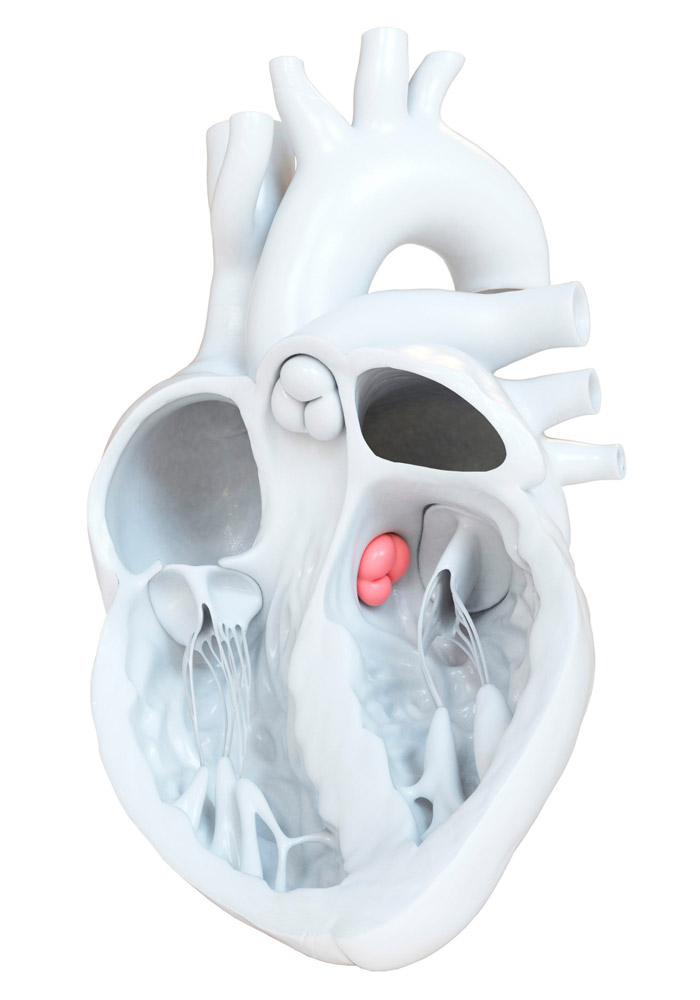
The aortic valve connects the heart to the systemic circulation, specifically the left ventricle to the aorta. The aorta is the largest artery and carries oxygenated blood throughout the body.
The valve opens as the left ventricle contracts, allowing blood to move forwards. It then closes during ventricular relaxation, preventing the blood just ejected from returning to the left ventricle.
Aortic regurgitation, or aortic valve insufficiency, is the backward flow of blood into the left ventricle during relaxation.
How is it diagnosed?
Clinical examination can reveal signs suggesting aortic regurgitation, such as a heart murmur or particular pulse characteristics. The diagnosis is confirmed by an echocardiogram.
What are the symptoms?
When aortic regurgitation develops gradually, the heart adapts, so the diagnosis may be missed and symptoms delayed.
The left ventricle initially responds by thickening its walls while maintaining its pumping function.
Eventually, this compensation becomes less effective. The ventricle enlarges, its ejection fraction falls and it remodels into a more spherical shape. Symptoms of heart failure gradually develop, including chest pain, breathlessness, reduced exercise tolerance, palpitations, dizziness or fainting.
Acute aortic regurgitation presents dramatically, with symptoms of acute heart failure.
What causes aortic regurgitation?
The condition may develop:
- Through degeneration associated with ageing
- In a bicuspid aortic valve
These two causes account for two-thirds of cases.
Other causes include:
- Rheumatic fever
- Certain medicines, such as appetite suppressants
- Leakage around a prosthetic aortic valve
- Trauma
- Infective endocarditis
- Aortic syndromes: these last two causes relate to acute regurgitation
Life Expectancy
Survival in asymptomatic severe aortic regurgitation is approximately 50% at ten years after diagnosis. Three in four patients remain symptom-free for up to seven years.
The appearance of symptoms is associated with substantially reduced life expectancy, approximately two years; four-year survival is estimated at 30%.
Treatment
Chronic severe aortic regurgitation is treated by valve replacement, usually surgically. Transcatheter aortic valve implantation may be possible in selected cases.
The choice of a biological or mechanical valve depends mainly on age and any coexisting conditions requiring long-term anticoagulation.
When should surgery take place?
If symptoms are already present at diagnosis, cardiac surgery is arranged promptly.
Asymptomatic patients undergo regular cardiology follow-up according to severity: every two years, annually or every 3–6 months.
Valve replacement is considered when left ventricular function or dimensions become affected, as assessed through serial echocardiograms.
If cardiac surgery is needed for another reason, such as coronary artery disease or an aneurysm of the ascending aorta, valve replacement is performed during the same operation.
How do acute and chronic aortic regurgitation differ?
It is important to distinguish the two. Acute aortic regurgitation is a potentially life-threatening emergency and is usually treated surgically.
Aortic Regurgitation and Exercise
Advice on sports and exercise in chronic aortic regurgitation is as follows:
- Mild: no restrictions.
- Moderate: no restrictions provided there are no symptoms, the left ventricle is not enlarged and functions well, and an exercise stress test is normal.
- Severe: only low- or moderate-intensity exercise, provided the left ventricle is not enlarged, functions well and an exercise stress test is normal.