
Written by Dimitrios Vrachatis, Specialist Cardiologist, PhD, National and Kapodistrian University of Athens.
What is aortic valve stenosis?
Aortic valve stenosis, or aortic stenosis, occurs when the valve opening is smaller than normal. The smaller the opening, the more significant the narrowing. Stenosis may be mild, moderate or severe.
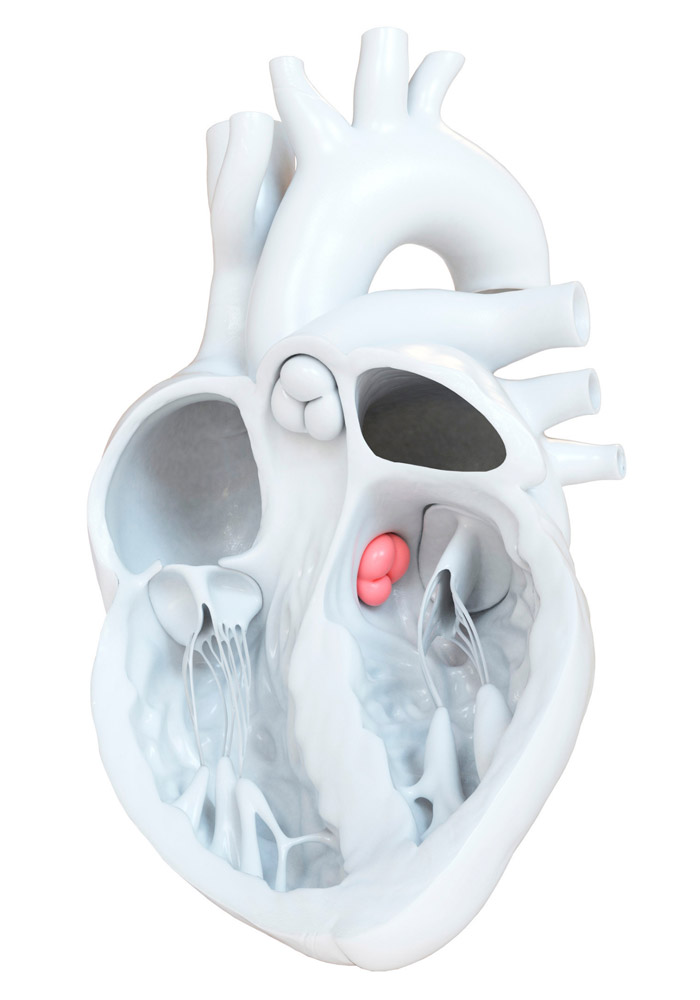
What is the aortic valve?
The aortic valve connects the left ventricle, the heart’s outlet, to the ascending aorta, the body’s main artery.
What is the normal valve opening?
The normal opening has an area of 3–4 cm2. A smaller opening is described as aortic valve stenosis.
When is aortic stenosis severe?
An opening smaller than 1 cm2 indicates severe aortic stenosis, which is usually accompanied by symptoms.
How is aortic stenosis classified?
Classification by valve area is:
- Mild: 1.5–2.0 cm2
- Moderate: 1.0–1.5 cm2
- Severe: 1 cm2 or less
How common is it?
Aortic stenosis is one of the most common valve diseases in the Western world. It is estimated to affect approximately 20% of people over 65.
What causes it?
It is usually a degenerative valve disease associated with ageing. It shares risk factors with coronary artery disease, such as hypertension, diabetes and dyslipidaemia.
In people with a bicuspid aortic valve, stenosis is more common and develops earlier. A normal, tricuspid valve has three leaflets rather than two.
Rheumatic fever was formerly the leading cause. It can follow a streptococcal infection that is not treated appropriately with antibiotics, with cardiac effects appearing years later. This cause has been virtually eliminated in Western countries.
What are the symptoms?
The disease usually follows a long, silent course. When symptoms appear, they may include:
- Angina, pain on exertion, or breathlessness
- Fainting
- Heart failure
At what age do symptoms appear?
Symptoms usually appear when the narrowing becomes severe, during the seventh or eighth decade of life.
With a bicuspid aortic valve, they may appear earlier, in the fourth or fifth decade.
Will moderate stenosis definitely become severe?
Moderate aortic stenosis is estimated to progress to severe stenosis in 50% of patients within five years.
Why is the onset of symptoms so important?
It marks a turning point because life expectancy falls dramatically without treatment.
What is the estimated survival?
Traditional studies estimate survival at 2–5 years in symptomatic severe aortic stenosis treated conservatively.
How is severe aortic stenosis treated?
When severe aortic stenosis causes symptoms, the recommended treatment is replacement with a prosthetic valve.
Replacement is also considered in certain asymptomatic cases: severe stenosis with impaired left ventricular function, or significant findings during stress echocardiography, such as symptoms or a fall in blood pressure.
The valve may also be replaced during open-heart surgery for another indication, such as bypass surgery. In that setting, replacement may be discussed even for moderate stenosis.
How does valve replacement affect survival?
After replacement, estimated survival returns approximately to its previous level, as if the aortic stenosis were not present.
How is aortic stenosis diagnosed?
Diagnosis and follow-up use an echocardiogram. In certain cases, stress echocardiography is required to determine severity accurately.
How is the valve replaced?
Traditionally, a cardiac surgeon replaces the valve surgically with:
- A mechanical valve, generally in patients younger than 60–65, or
- A biological valve in older patients.
How do mechanical and biological valves differ?
Biological valve leaflets are made from porcine or bovine pericardium, but have a shorter lifespan than mechanical valves.
The disadvantage of mechanical valves is the need for lifelong anticoagulation with acenocoumarol or warfarin.
Can the valve be replaced without open surgery?
An interventional cardiologist can offer minimally invasive replacement as an alternative to conventional surgery.
This is called transcatheter aortic valve implantation or replacement, TAVI or TAVR.
TAVI was initially used only for inoperable patients or those at very high surgical risk. Evidence from major clinical trials is gradually broadening the range of patients who can receive it.