
Written by Dimitrios Vrachatis, Specialist Cardiologist, PhD, National and Kapodistrian University of Athens.
What is cardioversion?
Cardioversion restores the patient’s heart rhythm from an arrhythmia to normal sinus rhythm.
How can cardioversion be performed?
A cardiac arrhythmia can be converted either pharmacologically, using medication, or electrically, using an electrical shock.
What is pharmacological cardioversion?
Pharmacological cardioversion is usually performed in a controlled hospital setting, either because the medication needs to be given intravenously or to manage possible adverse drug reactions, particularly when the patient is receiving it for the first time. Pharmacological cardioversion for atrial fibrillation or flutter usually takes several hours to restore the heart rhythm.
What is electrical cardioversion?
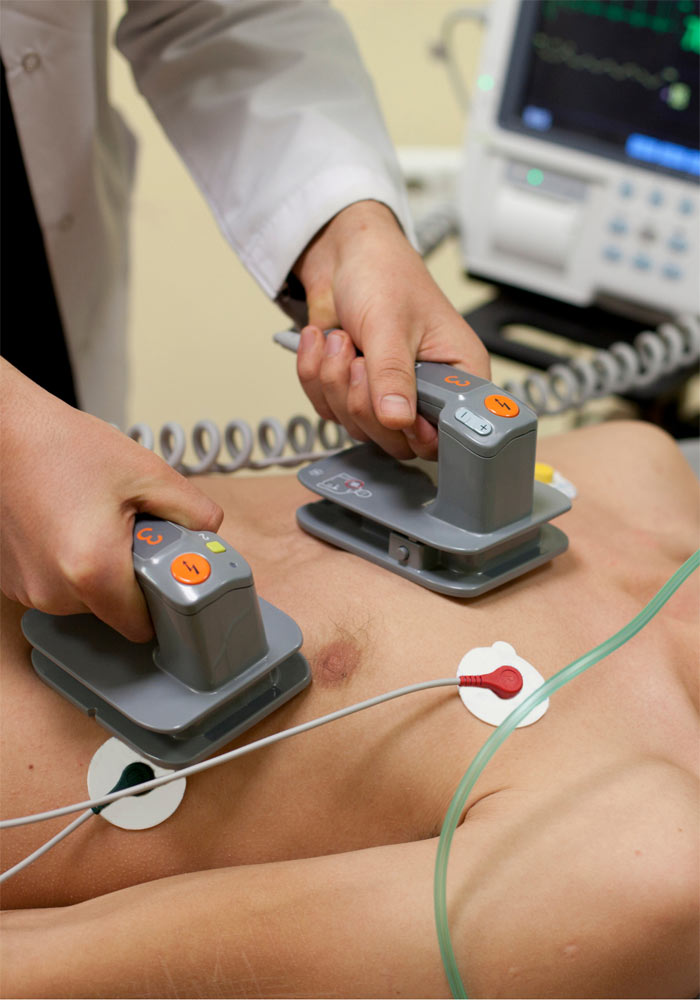
Electrical cardioversion is always performed in a controlled hospital setting. The patient receives mild sedation or anaesthesia so that they do not feel the electrical shock. Restoration of the heart rhythm is immediate. The patient usually returns to normal activities the same afternoon, although 24-hour monitoring may sometimes be needed.
Should I undergo cardioversion for atrial fibrillation or flutter?
For atrial fibrillation or flutter, the cardiologist may recommend cardioversion as part of a rhythm-control strategy after considering the patient’s complete medical history and available treatment options and discussing the benefits and risks with the patient.
When can cardioversion for atrial fibrillation or flutter be performed?
For atrial fibrillation or atrial flutter, the procedure may be performed only when it is certain that the arrhythmia is in its acute phase — within 24 hours of onset — or after a transoesophageal echocardiogram has excluded blood clots within the heart.
Otherwise, cardioversion must be scheduled after anticoagulant medication has been taken at an appropriate dose for at least 21 days. Depending on the clinician’s judgement and the patient’s circumstances, a transoesophageal echocardiogram may also be required beforehand.
Are there risks?
The main risk when restoring the heart rhythm in atrial fibrillation or flutter is an ischaemic stroke. This is why there are very specific requirements concerning the onset of the arrhythmia and anticoagulant treatment. When these are followed, the risk is small.
Other adverse effects are uncommon and temporary, including headache, dizziness and pain at the sites where the shock was delivered. Depending on the patient’s history, another possible risk is severe bradycardia after successful conversion of a rapid arrhythmia. These problems can be managed readily when the cardiologist has taken the appropriate precautions.